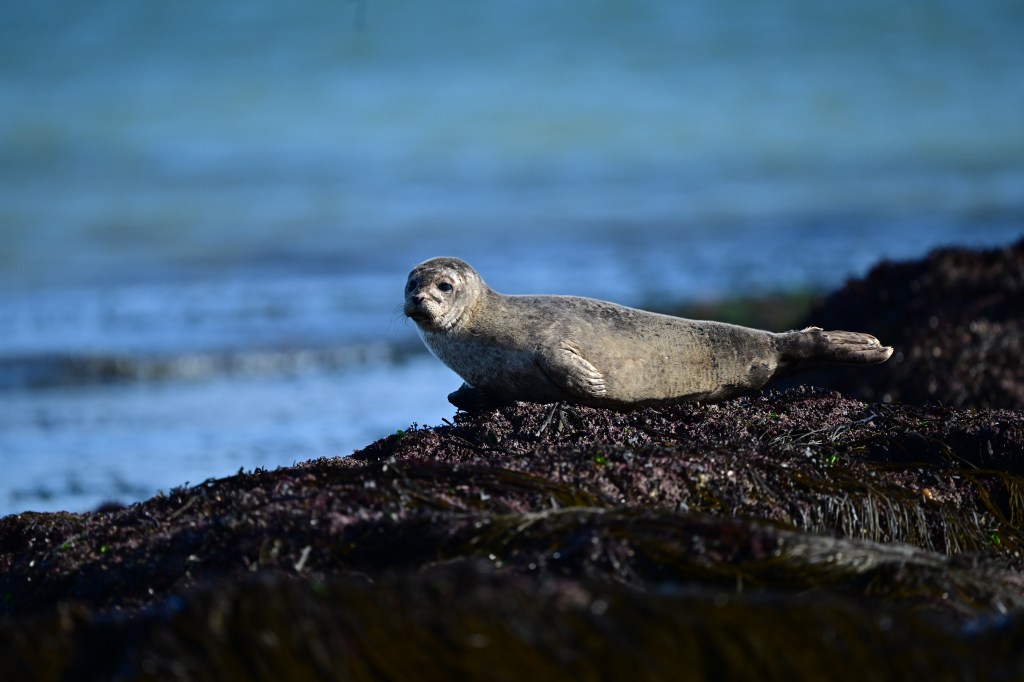
See Common Seals in Mannin Bay and the Salt Lough
I’m fortunate to be able to spend time in Derrigimlagh, a townland between Ballyconneely and Clifden in County Galway on the west coast of Ireland., part of the “Wild Atlantic Way.” The landscape is wild and the sea roars in from the Atlantic. The amount of rain can be depressing at times, but it’s a great place to be when the weather is fair.
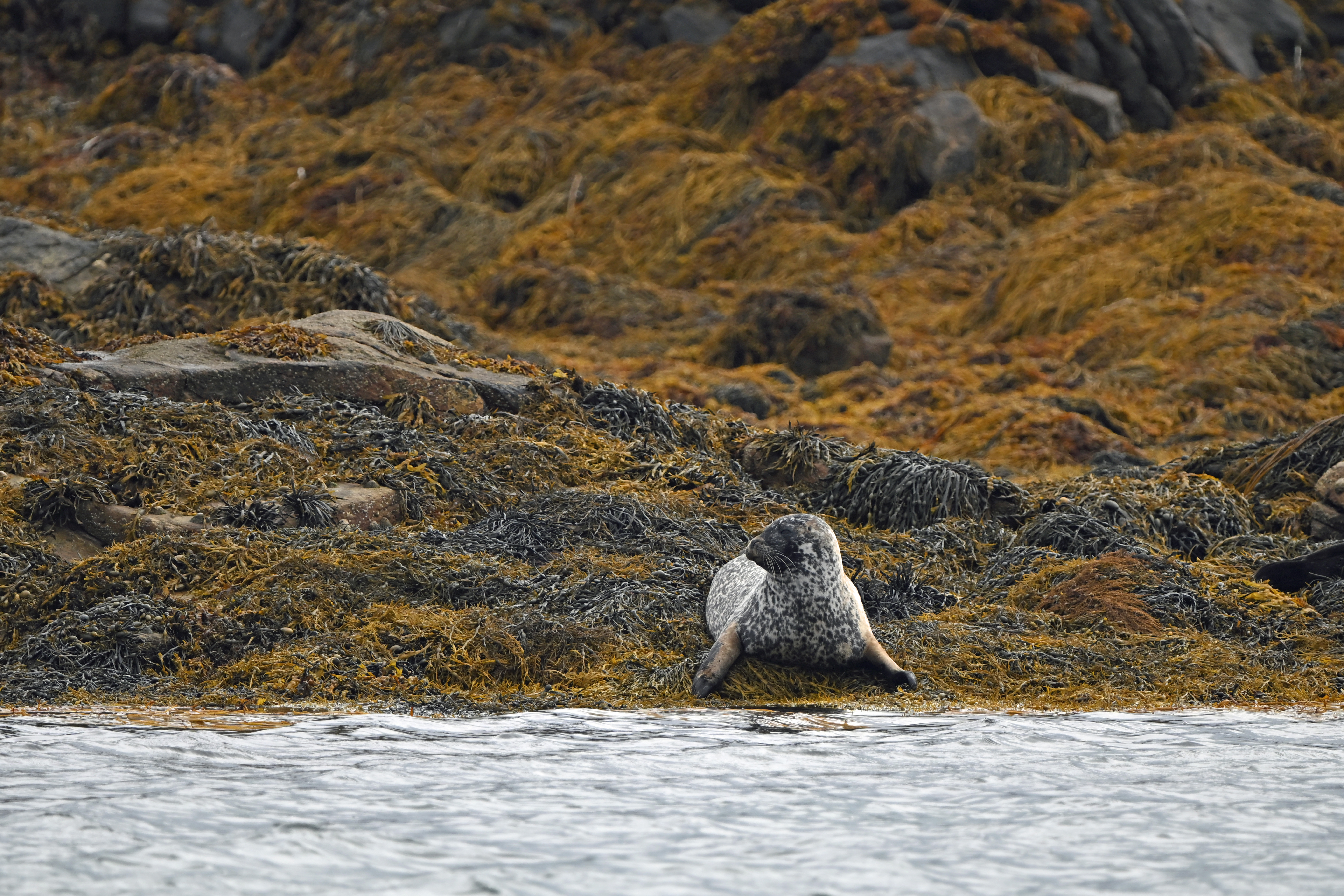
When in Derrigimlagh, I like walking around the coastline to observe and photograph sea birds and other wildlife. Seals (Pinniped, or wing-footed in Latin) are the largest mammals that can be seen. I usually encounter common seals (also called harbour seals) as they come up for air while hunting fish in Mannin Bay or when basking on the rocks (Figure 1).
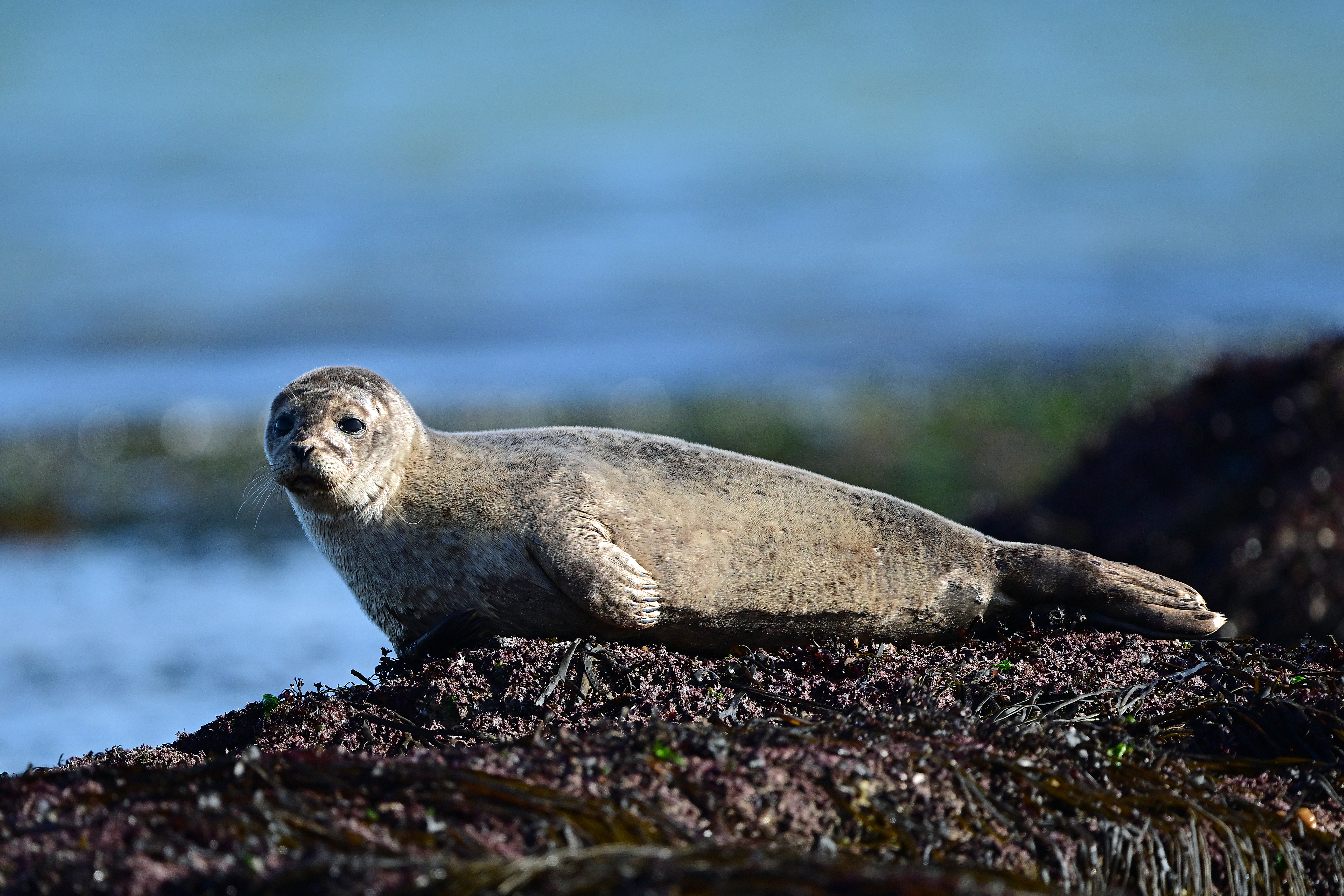

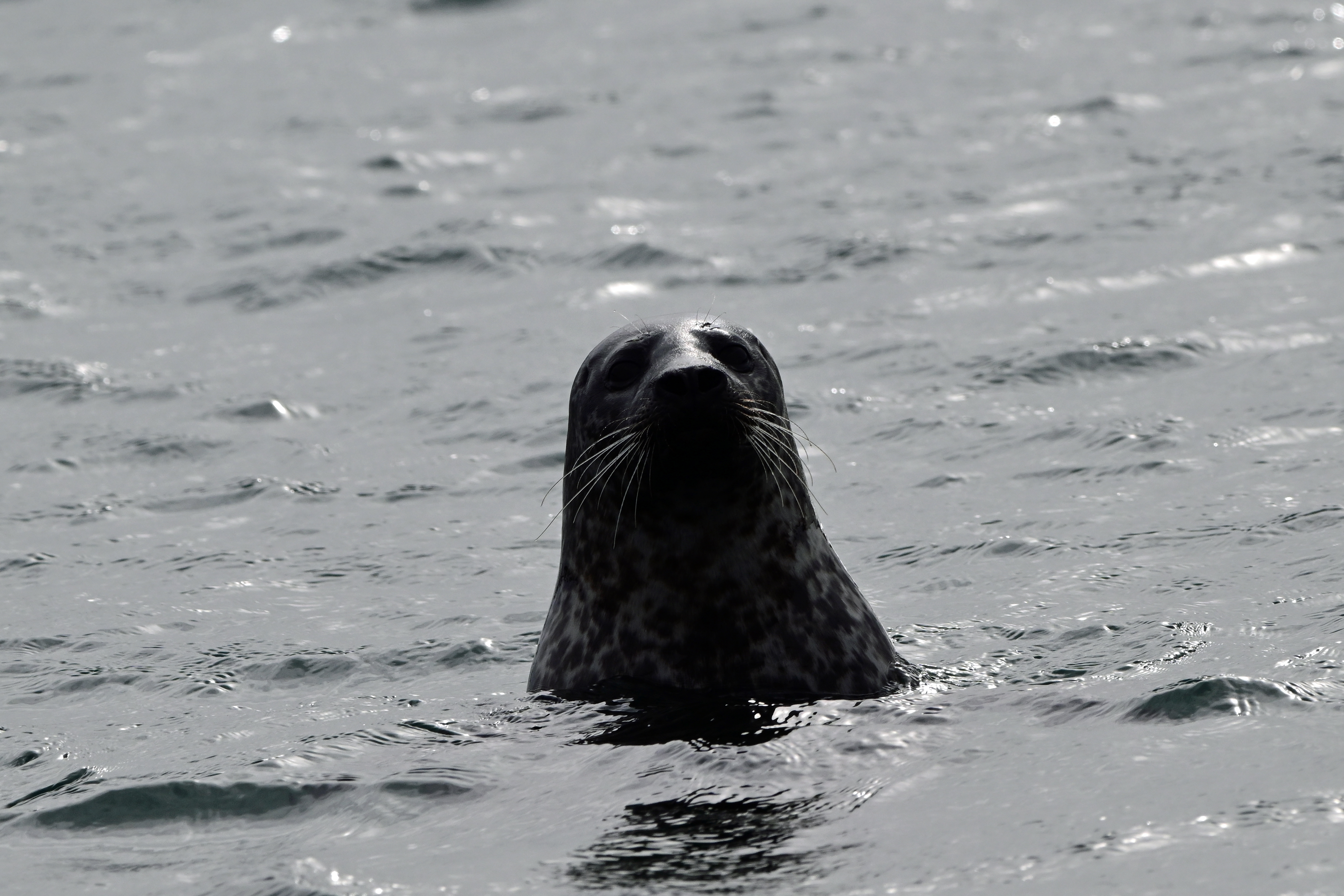
Seals are pretty cautious when out of the water and will quickly move off the rocks and back to the sea if you approach them. It’s hard to spot the seals in the Bay because all you can see is an occasional head as the seal pauses fishing to breathe (Figure 2).
Grey seals are also seen in Mannin Bay. These seals are larger than common seals and have a more prounounced horse-like face compared to the dog-like profile of common seals.
The Salt Lough Colony
The seals that hunt fish in Mannin Bay come from a colony that’s been established for many years in the Salt Lough. I’m not sure exactly how many seals are in the colony, but I have been able to count more than 25 animals at a time. A National Parks and Wildlife Service report from June 2010 noted 63 harbour seals. Apparently, grey seals and otters are also to be seen here, but I haven’t had that experience.
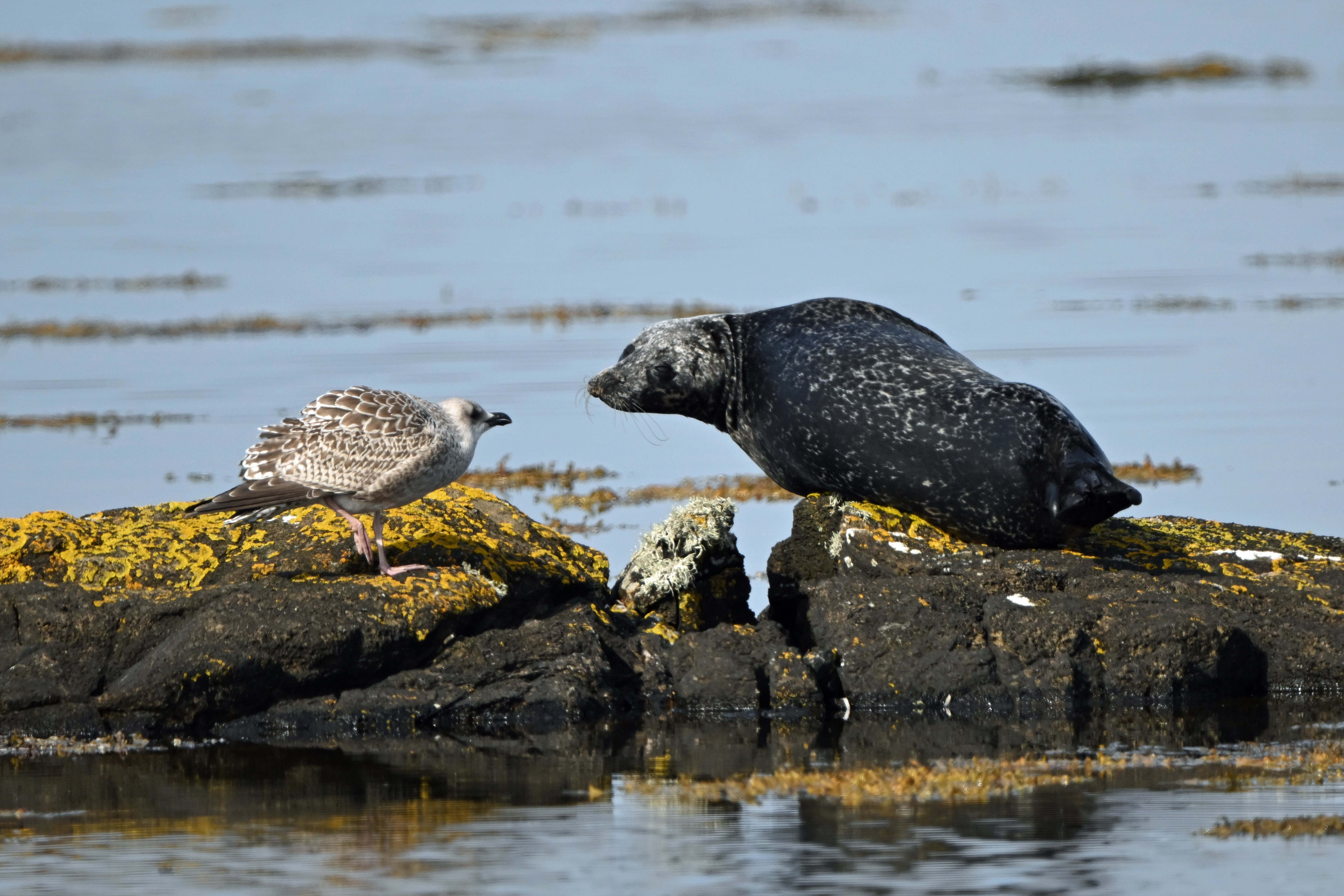
The Salt Lough can be reached by road a couple of hundred meters past the Connemara Sands Hotel. You can’t get down to the lough from the road because the route is blocked by barbed wire fences, but it’s very possible to see the seals from the road, if that’s where they’ve decided to locate themselves. You might have to move up and down the road to get the best view but should be able to see the seals relaxing on rocks, disputing space with gulls and other birds (Figure 3), or splashing on top of the seaweed growing in the lough (Figure 4).
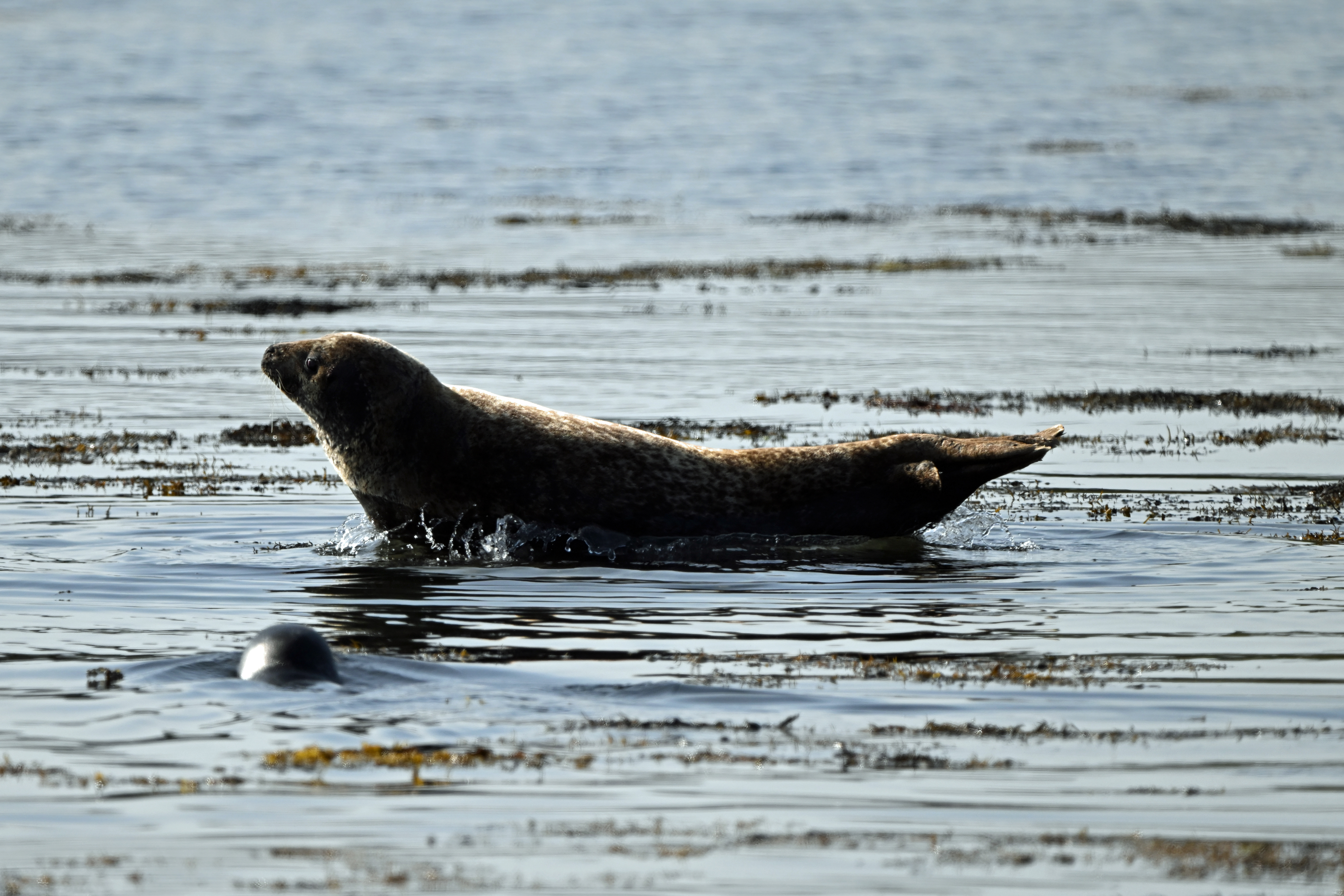
If the seals aren’t down by the road, they’ve moved to one of their other preferred locations in the Salt Lough, such as the large swathes of seaweed-covered rocks close to Mannin Bay (Figure 5).
The seals are naturally curious, and although they might move quickly from land to water if they spot someone close at hand, they’re quite happy to keep a close eye on what’s happening in their domain. Figure 6 is a picture of a seal popping up to check what I was doing as I sat looking at the Lough. A group of seven seals swam in and out, surfacing to have a look before submerging again to move to a different location. They were as happy to spend time observing me as I was to observe them.
Seeing a seal in their natural habitat is always a delight. The easiest sightings of the Ballyconneely seals are available at the Salt Lough. It takes more effort and is more challenging to see them on the Mannin Bay shoreline or in the open sea, and I always return from a walk pleased with myself when I have a sighting. Life is good on those days.


Leave a Reply